
When Home Becomes the New Hospital Room: How Parkwest Financial Group Supports Houston Families
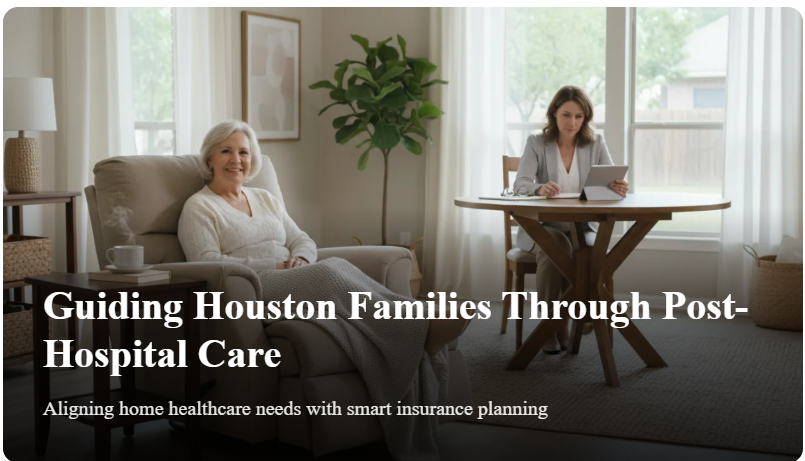
A loved one’s discharge from the hospital should feel like a relief, yet for many Houston families it is the moment when the hardest work begins. This spotlight on Parkwest Financial Group (PFG) in Houston Community Magazine explains the real-world home healthcare challenges families face after hospitalization—and how thoughtful planning, the right resources, and PFG’s First 48-Hours program can turn a stressful transition into a managed, supported experience.
The Hidden Demands of Home Healthcare After Hospital Discharge
When a patient leaves the hospital, the medical team goes off duty—but family members suddenly step on. In Houston, where many households care for aging parents or relatives with chronic conditions, this shift can be overwhelming. Common home healthcare challenges appear almost immediately:
Care coordination confusion: Families struggle to understand who is responsible for wound care, medication management, and follow-up appointments once the patient is home.
Physical demands on caregivers: Lifting, bathing, toileting, and preventing falls often require skills and equipment most relatives simply do not have on day one.
Medication and equipment management: New prescriptions, oxygen, walkers, or hospital beds must be coordinated, delivered, and paid for—often under tight time pressure.
Financial uncertainty: Families are unsure what health insurance will cover, what must be paid out of pocket, and how long support services will last.
Without guidance, these pressures can lead to readmissions, caregiver burnout, and avoidable emergencies. The reality is that family caregiving has become an unpaid, full-time job for many Houston households. Yet, with the right planning, families do not have to shoulder this burden alone.
Insurance-Backed Support: More Options Than Many Families Realize
A critical—but often overlooked—part of successful post-hospitalization care is understanding how health insurance and life insurance can work together to support home healthcare. Many policies include benefits families do not know exist:
Short-term home health visits for skilled nursing or therapy, often covered when ordered by a physician.
Durable medical equipment coverage, such as hospital beds, walkers, and oxygen supplies, which can significantly reduce out-of-pocket costs.
Living benefits or riders on life insurance that can provide access to funds while the policyholder is still alive if certain health conditions are met.
These resources can pay for in-home aides, transportation to follow-up appointments, or respite care for exhausted family members. Yet the rules are complex, and coverage varies widely between plans. This is where an experienced, locally focused financial professional becomes essential.
How Parkwest Financial Group Prepares Houston Families Before a Crisis
Parkwest Financial Group has built its reputation by helping Houston families think about pre-care preparation long before a hospital discharge is on the calendar. Rather than reacting in the middle of a crisis, PFG works with clients to align their life insurance and health insurance with realistic caregiving needs.
Their advisors review existing policies, identify gaps in home healthcare coverage, and explain—in clear, practical terms—how benefits would apply if a loved one experienced a serious illness, surgery, or accident. This proactive approach allows families to:
Understand which post-hospitalization services are likely to be covered.
Build a financial cushion for uncovered expenses, such as extended in-home care or caregiver time off work.
Choose policy features that support long-term caregiving, not just hospital-based treatment.
By focusing on education and clarity, Parkwest Financial Group ensures that Houston families are not reading policy fine print for the first time while sitting at a hospital bedside. Instead, they enter difficult moments with a plan and a partner already in place.
The First 48-Hours Program: Stabilizing the Most Critical Window
PFG’s signature First 48-Hours program is designed around a simple, evidence-based reality: the first two days after a loved one returns home are often the most fragile. Medication schedules are new, equipment is unfamiliar, and caregivers are still learning what “normal” looks like for the recovering patient.
Through the First 48-Hours program, Parkwest Financial Group helps families:
Map out expected home healthcare needs before discharge, in coordination with medical providers whenever possible.
Identify which insurance benefits can be activated immediately—such as home health visits, equipment coverage, or transportation support.
Establish a clear, written plan for the first two days at home, including who to call if complications arise.
This structured, insurance-aware approach reduces avoidable emergency room visits, lowers stress for family caregivers, and helps the patient stabilize safely at home. It is a practical example of how financial planning and healthcare realities intersect—especially in a city as large and diverse as Houston.
A Trusted Partner for Houston’s Caregiving Households
Home healthcare will continue to play a central role in how our community cares for aging parents, spouses, and loved ones recovering from serious illness. For many families, the question is not whether they will become caregivers, but whether they will be prepared when that day comes.
Parkwest Financial Group stands out as a steady, informed resource for Houston families facing the realities of family caregiving and post-hospitalization planning. By integrating life insurance, health insurance, and structured support like the First 48-Hours program, PFG helps ensure that when home becomes the new hospital room, families are not standing there alone.